Dealer Interface Designs Influencing Promotion Participation Rates Across Mobile Casino Networks
Klara Powell · Aug 5, 2026

Dealer Interface Designs Influencing Promotion Participation Rates Across Mobile Casino Networks
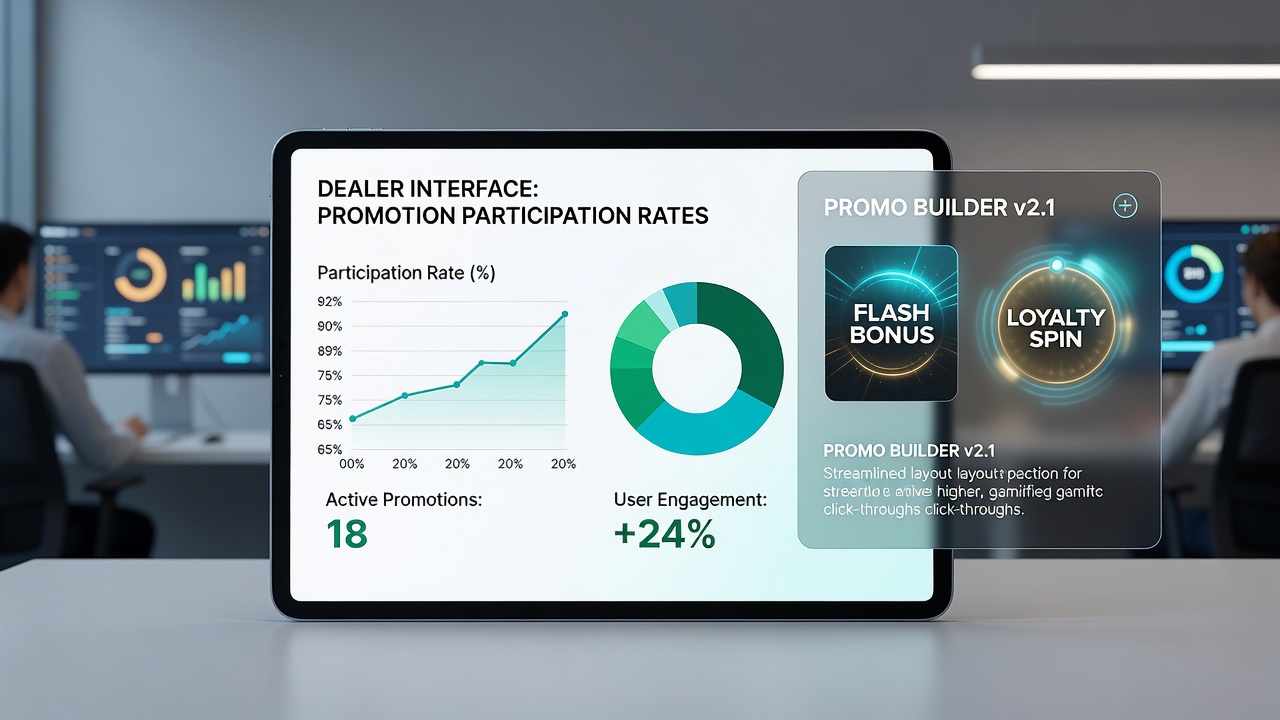
Dealer interfaces in mobile casino networks serve as the primary point of contact between players and promotional offers, with layout choices directly shaping how often users engage with bonuses and rewards. Research from industry reports indicates that elements such as button placement, visual hierarchy, and real-time notifications can alter participation rates by measurable margins across different platforms. Data collected through 2025 and into August 2026 shows consistent patterns where streamlined designs correlate with higher interaction levels, while cluttered screens tend to reduce them.
Core Components of Mobile Dealer Interfaces
Modern dealer interfaces integrate live video feeds with overlaid controls that allow instant access to promotions like deposit matches or free spins during table games. Observers note that successful designs prioritize touch-friendly elements, including large call-to-action buttons positioned within thumb reach and color-coded indicators that highlight active offers without interrupting gameplay flow. Studies tracking user behavior across multiple networks reveal that interfaces incorporating swipe gestures for menu access see elevated response times to promotional prompts compared to those relying solely on traditional taps.
Animation timing and load speeds also factor into engagement metrics, because delays in displaying bonus details often lead players to bypass offers entirely. According to figures from the Nevada Gaming Control Board, networks that optimized these technical aspects reported participation increases ranging from 12 to 18 percent in targeted campaigns during the first half of 2026.
Design Elements and Their Measured Impact
Visual cues within dealer interfaces, such as progress bars for loyalty tiers or pop-up previews of upcoming promotions, guide player attention toward participation opportunities. Those who've analyzed session data across regional operators find that interfaces using subtle highlighting around promotional zones achieve better conversion rates than those employing aggressive animations that can feel intrusive. Evidence suggests a direct link between navigation simplicity and reward claim frequency, with one multi-device study showing that reducing menu layers from four to two steps boosted participation by nearly a quarter in tested groups.
Personalization features, including dynamic offer displays based on prior play history, further influence outcomes. Researchers tracking mobile networks observed that tailored interfaces maintained higher retention through promotions because they aligned offers with individual patterns rather than presenting generic banners. This approach proved particularly effective in markets where regulatory frameworks require clear disclosure of terms, as seen in reports covering operations in Victoria, Australia.
Regional Patterns in Participation Data
Across North American and European networks, variations in interface standards produce distinct participation profiles. Platforms serving users in jurisdictions with strict geolocation rules often embed eligibility checks directly into the dealer view, which streamlines access but can introduce friction if verification steps feel lengthy. Data indicates that networks incorporating one-tap verification within the interface itself sustain stronger promotion uptake than those routing players to separate screens.
August 2026 updates to several major mobile systems incorporated A/B testing results that confirmed the value of integrated chat functions with dealers, where promotional details could be discussed in real time. Participation rates climbed when these features allowed seamless transitions from conversation to bonus activation, according to aggregated analytics shared by gaming associations in multiple regions. Operators adapting designs to accommodate varying screen sizes also documented steadier engagement across device types.
Software Updates and Ongoing Adjustments
Regular refinements to dealer interfaces reflect ongoing analysis of participation metrics, with updates frequently addressing player drop-off points identified through heat mapping. Those monitoring network performance note that even minor repositioning of promotional tiles can shift outcomes noticeably, especially when combined with contextual prompts tied to specific game moments. Evidence from longitudinal tracking shows networks that iterate based on these insights maintain more consistent participation levels over extended periods.
Integration with broader payment and loyalty systems adds another layer, because seamless handoffs between interface elements encourage players to complete promotional actions without leaving the dealer view. Reports compiled by research institutions highlight how such connectivity reduces abandonment rates during multi-step offers.
Conclusion
Interface design choices in mobile dealer environments continue to shape promotion participation across casino networks through measurable influences on usability and visibility. Ongoing data collection through 2026 supports targeted refinements that align visual and functional elements with user behavior patterns. As networks expand, the relationship between these design decisions and engagement rates remains a focal point for operators seeking to optimize promotional reach.