Exploring Encryption Standards Evolution in Multi-Platform Casino Payment Gateways
Sam Baumann · Aug 1, 2026
Exploring Encryption Standards Evolution in Multi-Platform Casino Payment Gateways
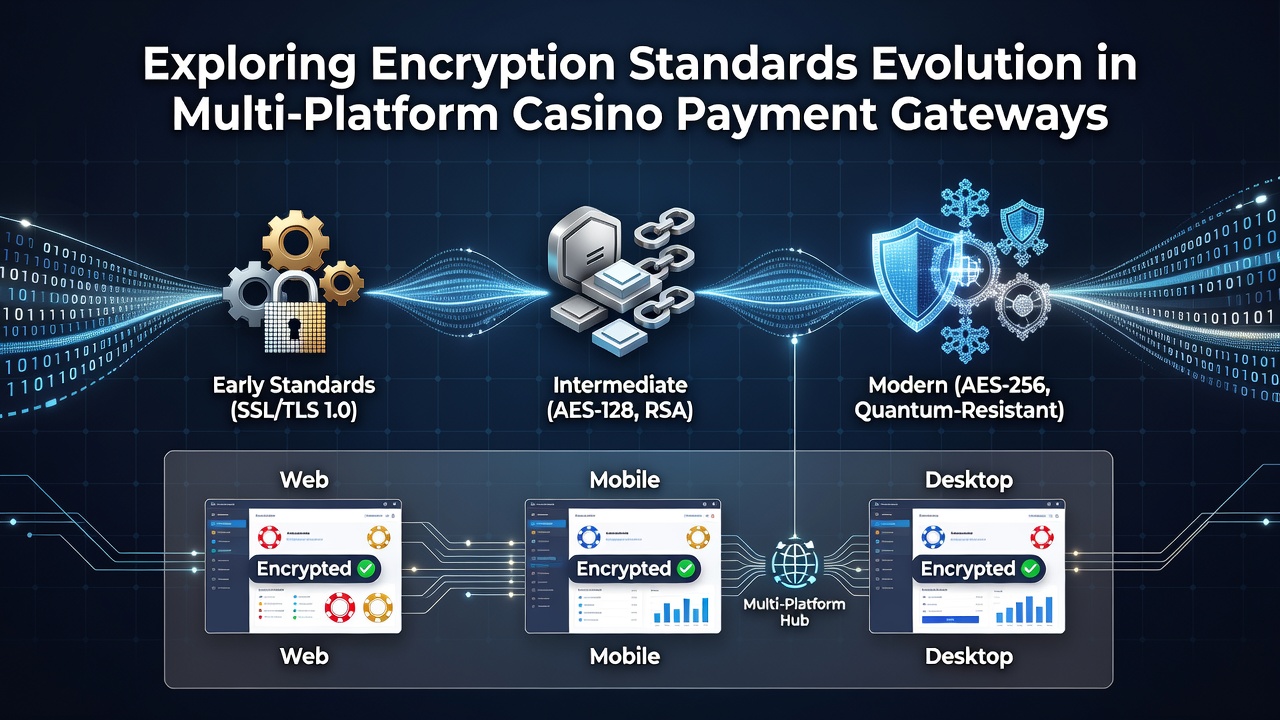
Data from industry monitoring shows encryption standards in casino payment gateways have shifted from basic SSL implementations in the late 1990s to layered protocols built around TLS 1.2 and TLS 1.3 by mid-2026, with multi-platform environments driving much of the change because operators must secure web browsers, mobile applications, and desktop clients simultaneously.
Early Encryption Foundations in Online Gaming Payments
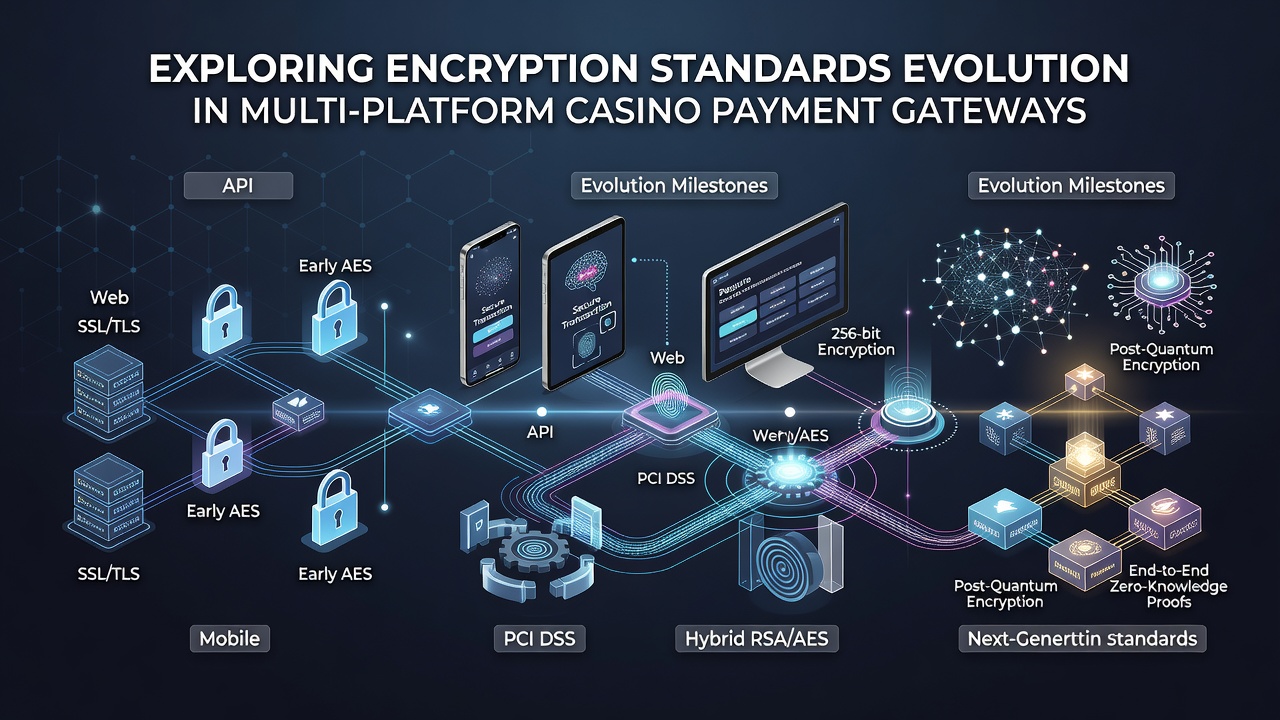
Operators first relied on 40-bit and 56-bit SSL certificates to protect credit card details during the initial wave of internet casinos, yet those keys proved vulnerable once computational power increased and researchers demonstrated practical attacks against export-grade encryption; payment processors responded by adopting 128-bit and 256-bit AES symmetric encryption paired with RSA key exchanges, a combination that became the baseline for PCI DSS compliance programs across North American and European markets.
By the early 2000s, documented breaches at several payment processors prompted regulators in multiple jurisdictions to require explicit TLS support rather than SSL, and gateway providers began publishing migration timelines that aligned with updates from standards bodies such as NIST.
Adoption of TLS 1.2 and the Push Toward TLS 1.3
TLS 1.2 introduced authenticated encryption modes and stronger hash functions that reduced risks from padding oracle attacks, while TLS 1.3 removed legacy cipher suites and shortened handshake times, a change that benefited mobile casino applications where latency directly affects deposit completion rates. Figures released in August 2026 by several gateway vendors indicated that over 85 percent of active casino payment endpoints had completed TLS 1.3 rollouts, driven partly by browser vendors deprecating older protocol versions and partly by operator requirements to support cross-device sessions without re-authentication friction.
Multi-platform environments create additional constraints because Android and iOS security libraries enforce different default cipher preferences than desktop browsers, forcing gateway teams to maintain configuration matrices that satisfy both app-store guidelines and regional banking rules at the same time.
Post-Quantum Cryptography Preparations in Gaming Gateways
Research groups at several universities have published test results showing that current RSA and ECC implementations could be broken by sufficiently large quantum computers, prompting payment gateway developers to evaluate hybrid key-exchange methods that combine classical algorithms with lattice-based or hash-based post-quantum candidates. In August 2026, at least two major casino platform providers announced pilot programs that integrate NIST-selected post-quantum algorithms into their staging environments, although production deployment remains limited to internal testing rather than live player transactions.
Those pilots focus on preserving backward compatibility for older mobile devices that lack the processing headroom for larger post-quantum key sizes, and early performance data indicates handshake times increase by roughly 15 percent when hybrid modes activate, an overhead that operators continue to monitor against user drop-off metrics.
Regulatory and Compliance Drivers Across Regions
Canadian provincial regulators and the Malta Gaming Authority both updated their technical standards documents in 2025 to reference TLS 1.3 as a mandatory control for any new license applications, while Australian state authorities incorporated similar language into their digital payment security audits. These requirements intersect with PCI DSS 4.0 mandates that took effect in 2025, creating overlapping deadlines that gateway vendors address through unified configuration templates rather than separate regional builds.
Observers note that operators maintaining multi-jurisdictional licenses now allocate dedicated engineering resources to track cipher deprecation schedules published by browser vendors and mobile operating systems, because a single outdated endpoint can trigger license reviews or payment processor penalties.
Implementation Patterns Observed in 2026
Gateway logs analyzed by security firms show that successful TLS 1.3 handshakes now dominate traffic volumes, yet a measurable percentage of older mobile clients still negotiate TLS 1.2 sessions when connecting from regions with slower network upgrades. Payment processors respond by offering dual-stack endpoints that automatically select the strongest mutually supported protocol without requiring player intervention.
Hardware security modules deployed in data centers handling casino transactions have also migrated to firmware versions that support quantum-resistant algorithms in addition to classical acceleration, reducing the need for separate appliances during the transition period.
Conclusion
Encryption standards in multi-platform casino payment gateways continue to advance through coordinated updates among standards organizations, regulators, and technology vendors. The move from legacy SSL to TLS 1.3, combined with early post-quantum testing, reflects measurable progress driven by compliance deadlines and performance requirements across devices. Continued monitoring of adoption metrics through 2026 and beyond will determine how quickly hybrid and fully quantum-resistant configurations reach production environments used by operators worldwide.