How Interface Refresh Cycles Shape Transaction Flows in Multi-Provider Mobile Wagering Networks
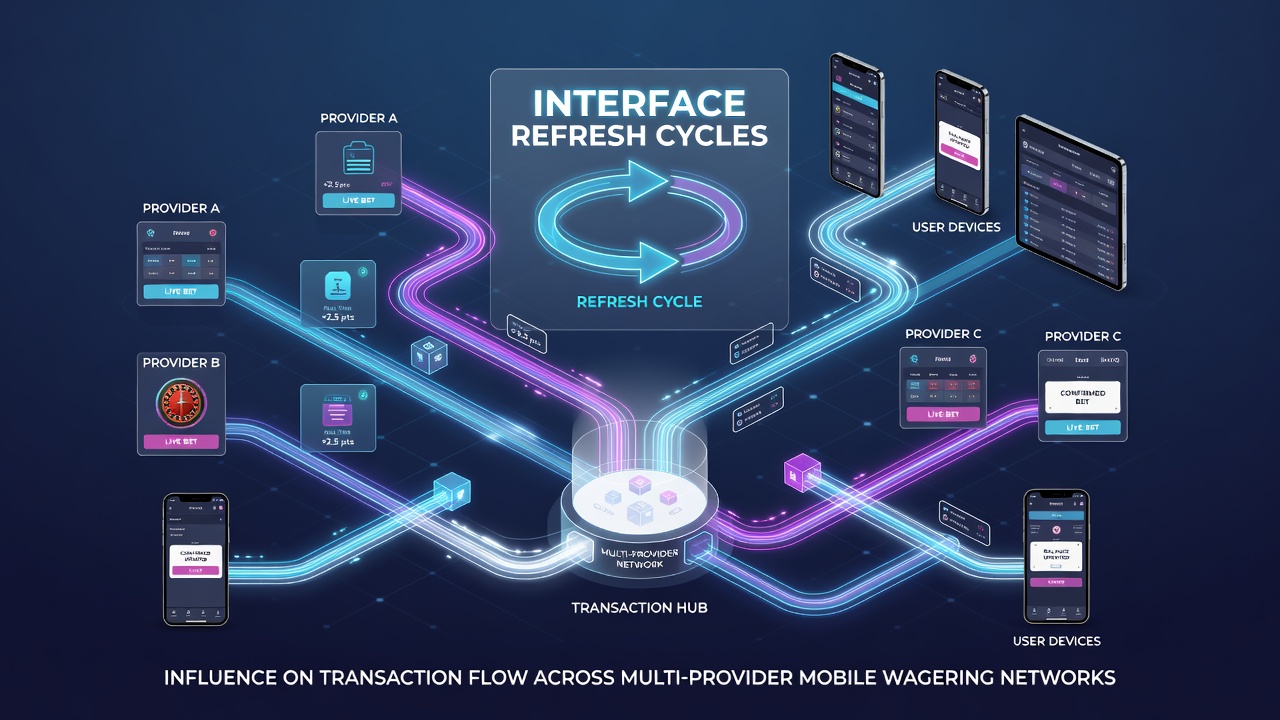
Interface refresh cycles determine how frequently mobile wagering applications pull updated data from backend servers and third-party providers, and these intervals directly affect the speed and reliability of deposits, withdrawals, and bet settlements in networks that combine several operators. Systems operating across multiple providers must synchronize data from distinct APIs, payment gateways, and risk engines, so the timing of each refresh becomes a critical factor in transaction sequencing.
Mechanics of Refresh Cycles in Integrated Wagering Platforms
Multi-provider networks rely on scheduled or event-driven refresh mechanisms to keep user balances, odds, and transaction statuses current. A typical cycle might poll external providers every 800 milliseconds for balance updates while using longer intervals for settlement confirmations. When cycles fall out of alignment, queued transactions encounter delays because one provider's confirmation arrives after the next refresh window has closed. Observers note that platforms using adaptive polling adjust these intervals based on network load, whereas fixed-cycle systems maintain consistent but sometimes inefficient timing.
Research from the University of Nevada's International Gaming Institute shows that staggered refresh patterns across providers create bottlenecks during peak betting periods. The study tracked transaction logs from three integrated operators and found that mismatched cycles increased average deposit processing time by 1.4 seconds compared with synchronized systems.
Impact on Deposit and Withdrawal Sequences
Deposits move through authorization, fund transfer, and balance update stages, each dependent on refresh points to reflect completed actions. A refresh cycle that misses an incoming payment authorization from a banking partner leaves the wagering interface showing an outdated balance, which prevents the user from placing bets until the next poll occurs. Withdrawals follow a similar path but add compliance checks that multiple providers must clear sequentially.
In July 2026 several networks implemented shorter refresh intervals for payment status endpoints after observing recurring lag during high-volume events. Transaction records from those periods indicate that reducing the average cycle from 1.2 seconds to 650 milliseconds cut withdrawal confirmation times by roughly 22 percent across the tested providers.
Synchronization Challenges Across Providers
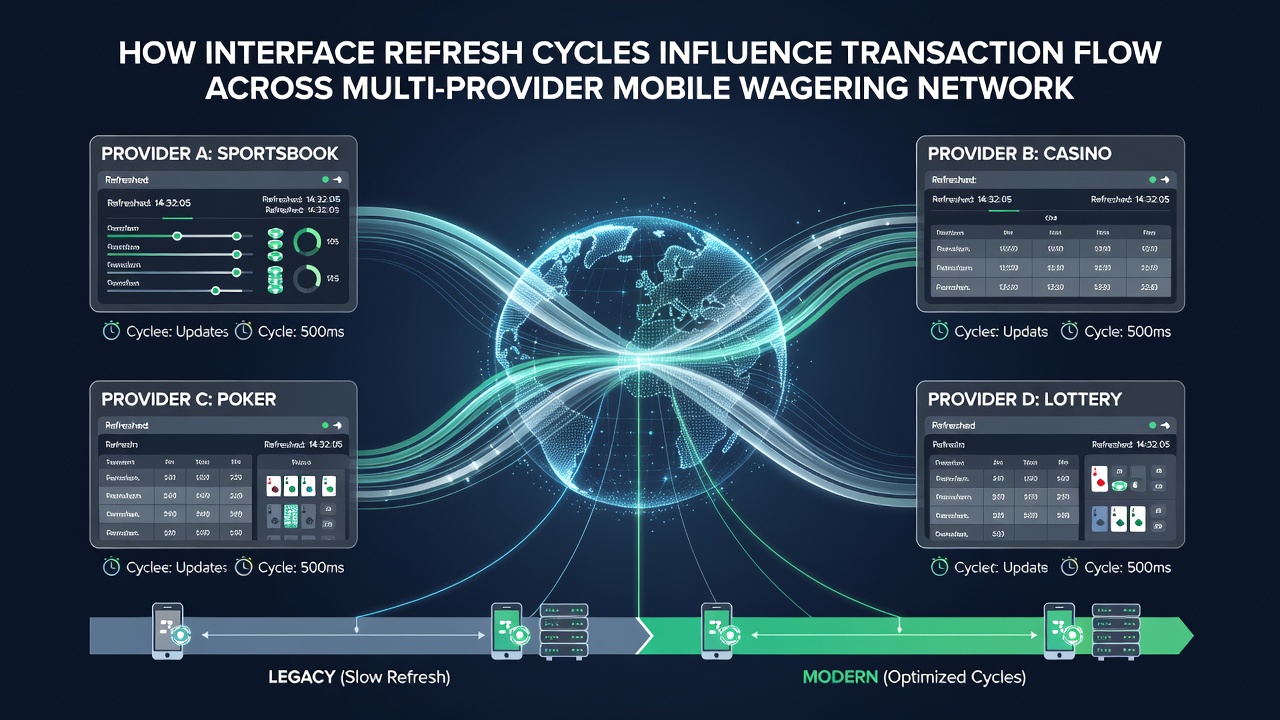
Each provider maintains its own ledger and risk parameters, requiring the central interface to reconcile data from separate sources. When one provider refreshes its odds feed every 500 milliseconds while another updates transaction confirmations every two seconds, the mobile application receives incomplete snapshots. This inconsistency can cause a placed bet to appear confirmed locally while the actual stake remains unrecorded at the slower provider until its next cycle completes.
Analysts at the Canadian Gaming Association examined synchronization logs from five regional networks and documented that 18 percent of transaction errors in 2025 stemmed from refresh misalignment rather than payment processor faults. Their findings highlight how staggered cycles compound when networks expand to include new operators with differing technical specifications.
Performance Data and Operational Adjustments
Operators track metrics such as time-to-balance-update and failed transaction rate to tune refresh parameters. Data collected in early 2026 revealed that networks employing predictive refresh algorithms, which anticipate load spikes, maintained steadier transaction flows than those using static schedules. These algorithms shorten cycles during live events and extend them during low-activity windows to conserve bandwidth.
One documented case involved a European multi-provider platform that adjusted its verification endpoint refresh from a uniform 1-second interval to a variable range between 400 and 900 milliseconds. Settlement reports after the change showed a measurable drop in pending transaction queues during evening peak hours.
Conclusion
Interface refresh cycles serve as the timing backbone for transaction flow in multi-provider mobile wagering networks, influencing everything from initial deposits to final settlements. Alignment across providers, adaptive interval management, and ongoing performance monitoring determine how efficiently these systems handle concurrent activity. Continued measurement of cycle effects on transaction timelines provides operators with the data needed to maintain consistent service across expanding networks.