How Regional Licensing Frameworks Shape Feature Rollouts in Portable Interactive Gaming Systems
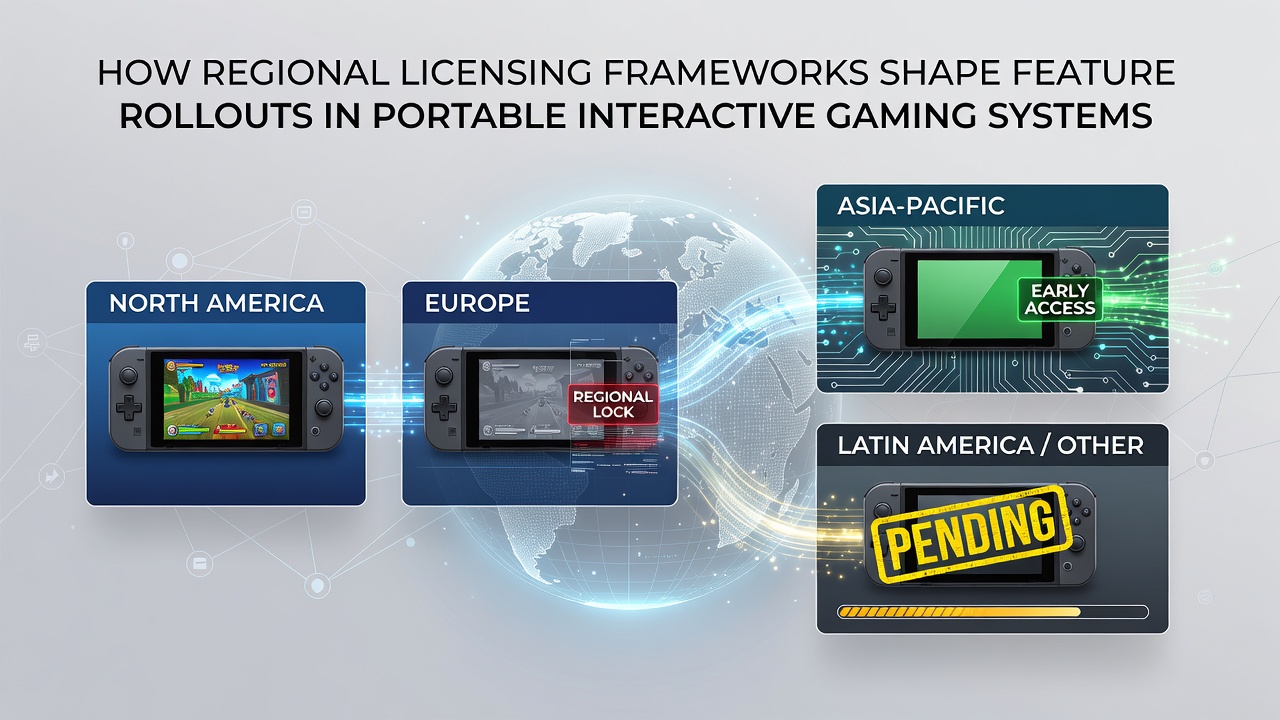
Portable interactive gaming systems operate under licensing rules that vary sharply by jurisdiction, and those differences directly determine which features reach users and when they appear, according to data compiled by multiple regulatory bodies and industry reports. Developers must navigate approval processes that differ from one region to another before rolling out connectivity options, payment integrations, or multiplayer functions on handheld devices. Research from the European Commission on digital single market initiatives shows how one set of standards can accelerate certain updates while another jurisdiction's requirements slow the same changes.
Licensing Structures Across Key Markets
European Union member states apply harmonized directives on consumer protection and data security yet still maintain national variations that affect portable device approvals. In contrast, individual U.S. states such as New Jersey and Pennsylvania maintain separate licensing boards that require distinct technical audits before permitting features like real-time location tracking or cross-device synchronization. Observers note that these layered requirements often force manufacturers to segment their update schedules so a single hardware model ships with region-specific firmware.
Asia-Pacific regulators add further complexity through content classification systems and local partnership mandates. Data from the Australian Communications and Media Authority indicates that approval timelines for interactive elements can stretch several months longer than those required in neighboring markets, pushing companies to stagger feature releases across different portable platforms.
Technical Feature Delays and Adaptations
Connectivity features such as cloud saves and live leaderboards frequently encounter the strictest scrutiny because they involve continuous data transmission. Licensing bodies evaluate encryption standards, age-verification protocols, and payment processing pathways before granting clearance. One manufacturer documented in industry filings adjusted its rollout calendar for July 2026 after receiving staggered approvals that allowed the European version to launch weeks ahead of the North American edition.
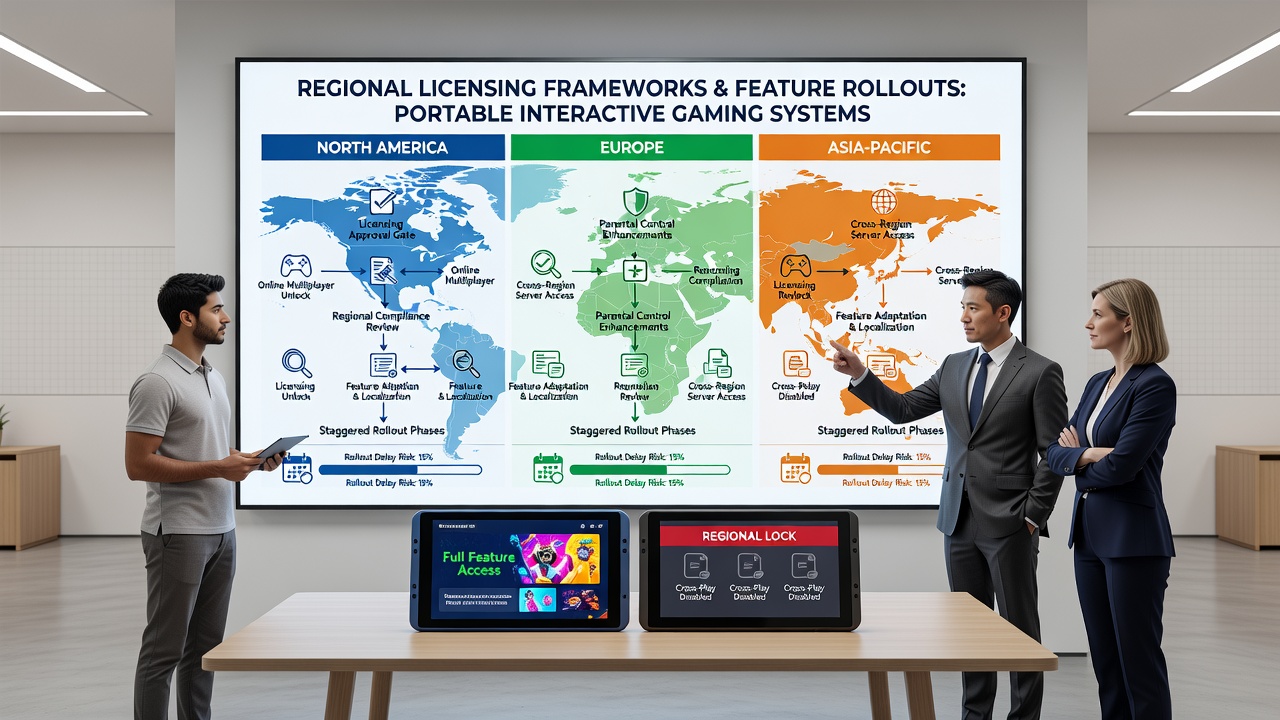
Payment-related functions face additional hurdles tied to financial services regulations. Researchers at the University of Nevada, Las Vegas tracked how licensing conditions in different states influenced the sequence in which digital wallet integrations appeared on handheld consoles. Their findings reveal that systems cleared for use in one jurisdiction often ship without certain transaction options until separate approvals arrive, creating distinct user experiences within the same product line.
Regional Examples and Patterns
Canada's provincial gaming authorities, including those in Ontario and British Columbia, require detailed reporting on responsible gaming tools before permitting social features on portable devices. This process has led several developers to introduce optional modules that activate only after local certification completes. Patterns documented in academic studies show that companies frequently maintain parallel development branches to accommodate these staggered timelines without halting overall progress.
Similar dynamics appear in parts of Latin America where emerging frameworks emphasize consumer data localization. Manufacturers must configure servers and storage protocols to meet these rules before enabling certain cloud-based interactions, and the resulting adaptations sometimes alter battery performance or update frequency on affected devices. Those who've studied these cases note that early engagement with regulators often shortens the interval between hardware release and full feature availability.
Conclusion
Regional licensing frameworks continue to dictate the pace and scope of feature availability in portable interactive gaming systems through distinct approval sequences and technical mandates. Evidence from regulatory filings and academic analyses demonstrates that manufacturers respond by segmenting updates and maintaining region-specific configurations. As markets evolve, these frameworks remain central to determining which capabilities reach users first and how consistently they function across borders.