Integration Challenges and Solutions for Seamless Transactions in Live Mobile Casino Environments
Harper Albrecht · Jul 29, 2026

Integration Challenges and Solutions for Seamless Transactions in Live Mobile Casino Environments
Live mobile casino environments combine real-time video streams with instant betting and payment functions, yet operators face persistent hurdles when connecting these elements across diverse devices and networks. Systems must handle continuous data flow from dealer tables while processing deposits, withdrawals, and bets without interrupting gameplay, and any delay in one component quickly affects the entire session.
Core Integration Hurdles in Mobile Live Gaming
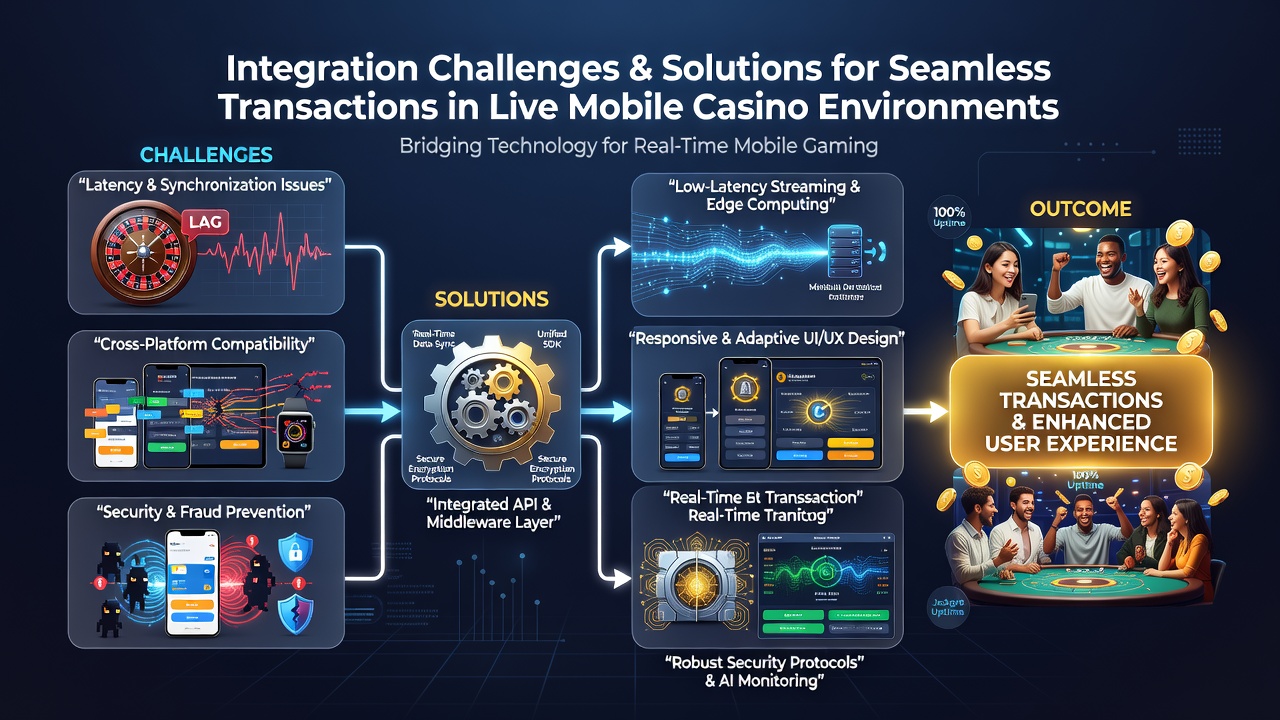
Payment gateway connections often clash with live streaming protocols because mobile networks introduce variable latency that disrupts synchronized transaction confirmations. Developers report that API mismatches between third-party processors and proprietary casino platforms create repeated failures during peak hours, especially when multiple users place simultaneous bets on the same table. Security layers add further complexity since encryption requirements for financial data must align with low-latency video delivery without exposing vulnerabilities.
Device fragmentation compounds these issues. Older smartphones running legacy operating systems struggle to maintain stable connections to both the live feed and the payment backend, leading to dropped sessions or incomplete transfers. Regulatory frameworks across jurisdictions demand separate compliance checks for each payment method, which slows integration timelines when platforms expand into new regions.
Technical Barriers and Data Flow Issues
Real-time verification systems require rapid cross-referencing between user accounts, banking partners, and gaming servers, yet database queries sometimes queue during high-volume periods. Observers note that transaction logs can fall out of sync with the live game state, creating discrepancies that must be resolved manually. Cloud-based scaling helps during surges, but inconsistent regional data center performance still produces bottlenecks in cross-border operations.
Proven Solutions Operators Have Adopted
Standardized API frameworks now allow payment processors to plug directly into streaming servers through middleware layers that buffer and prioritize data packets. Companies that implemented these connectors reduced average transaction times by measurable margins in 2025 testing cycles. Modular architecture separates the video feed from financial processing, so updates to one system do not cascade into the other.
Edge computing nodes placed near user clusters cut latency by handling initial transaction validation locally before routing to central servers. This approach proved effective in multi-jurisdictional rollouts where network conditions vary widely. Encryption protocols optimized for streaming traffic maintain security standards while preserving frame rates, and automated reconciliation tools flag mismatches within seconds rather than minutes.
Regulatory and Operational Adjustments
Operators coordinate with oversight bodies such as the Canadian regulatory framework for gaming to pre-certify integrated payment modules, shortening approval windows. Similar coordination occurs with European authorities that publish technical specifications for mobile transaction security. Data from industry reports shows that platforms aligning early with these guidelines encounter fewer post-launch fixes.
Training programs for technical teams emphasize cross-functional testing between live video teams and payment engineers. One documented rollout in early 2026 demonstrated that joint simulation environments caught 80 percent of integration faults before public release. Continuous monitoring dashboards track transaction success rates alongside stream quality metrics, allowing rapid isolation of problems when they surface.
Emerging Patterns Through Mid-2026
By July 2026 several platforms had rolled out unified ledgers that record both gaming events and financial movements in a single timestamped stream. These systems rely on distributed verification nodes that operate independently of the main casino database, reducing single points of failure. Research from academic institutions tracking mobile gaming infrastructure indicates steady improvement in uptime metrics once these ledgers reach full deployment.
Partnerships between software providers and regional telecom carriers have also accelerated, delivering prioritized network paths for casino traffic during live sessions. The result appears in fewer interrupted withdrawals and deposits even on congested mobile networks.
Conclusion
Integration of transaction systems within live mobile casino environments continues to evolve through targeted technical refinements and regulatory alignment. Platforms that invest in modular designs, localized processing, and preemptive compliance testing maintain smoother operations as user volumes grow. Ongoing data collection from deployed systems guides further adjustments, ensuring that payment flows remain consistent with the pace of live dealer action across devices and regions.