Player Retention Patterns Linked to Software Updates in Regional Payment and Promotion Systems
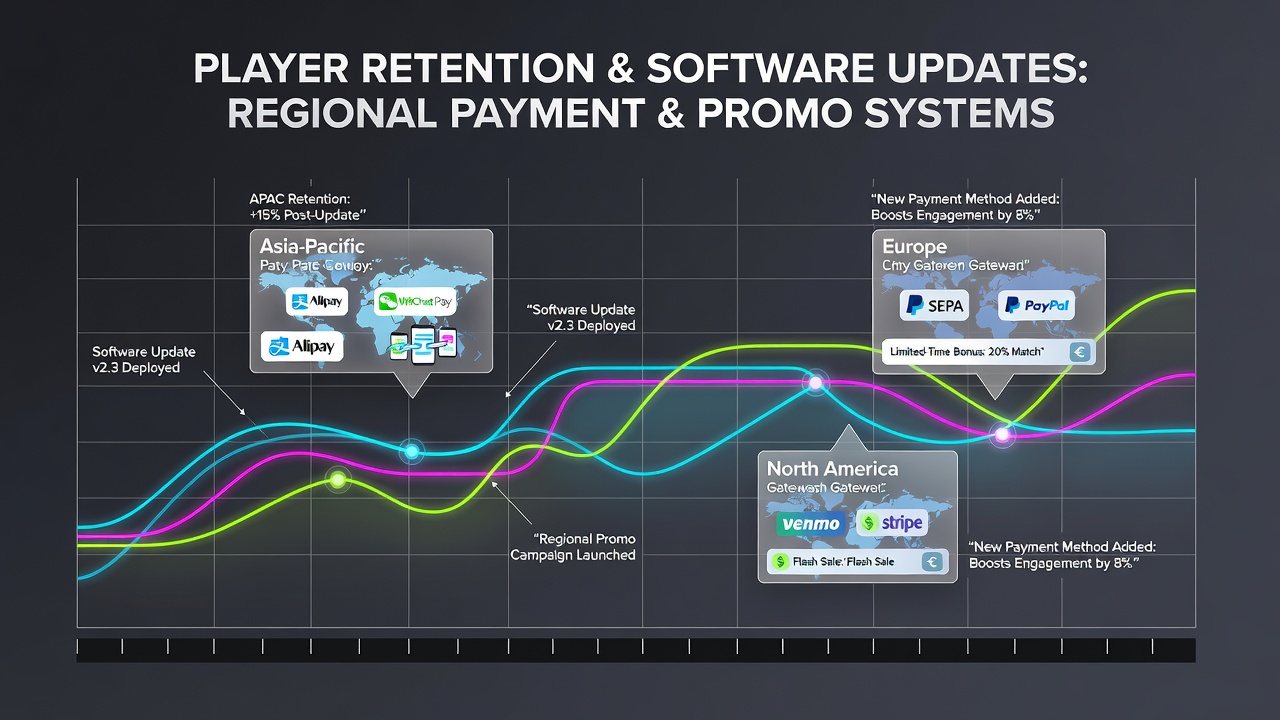
Software updates in payment and promotion systems continue to shape how regional gaming operators manage player activity, with retention metrics reflecting changes introduced through these technical adjustments. Operators across multiple jurisdictions track shifts in deposit frequency, withdrawal processing times, and bonus redemption rates following each deployment cycle, while data collected from platforms in North America, Europe, and Asia Pacific reveal distinct patterns tied to update timing and feature modifications.
Regional Payment Infrastructure and Update Cycles
Payment systems in regulated markets receive scheduled software revisions that alter transaction flows, security protocols, and integration points with promotional tools. In Australia, updates rolled out during the first half of 2026 adjusted real-time verification modules, which in turn affected how players interacted with deposit bonuses tied to those same systems. Observers note that retention curves often flatten or rise depending on whether the update streamlines or complicates the checkout sequence, and figures compiled by state-level regulators show measurable differences between pre-update and post-update cohorts over 90-day windows.
European markets present another layer of variation, since cross-border operators must align updates with directives from multiple national authorities. When payment gateways receive patches that modify currency conversion or multi-wallet support, promotion eligibility rules frequently require simultaneous recalibration. Research from academic institutions in the Netherlands indicates that players who encounter seamless transitions during these coordinated updates maintain higher session frequencies compared with those who face temporary friction, even when the underlying promotional offers remain unchanged.
Promotion Systems and Their Technical Dependencies
Promotional engines depend on live data feeds from payment processors, which means any software revision on one side triggers downstream adjustments on the other. Regional operators in Canada implemented new bonus allocation algorithms in May 2026 that relied on updated payment confirmation signals, and subsequent tracking revealed elevated retention among players who qualified for tiered rewards within the first 48 hours after each deposit. Those who experienced delayed confirmation messages showed lower return rates during the same period, highlighting the direct link between payment system stability and promotional uptake.
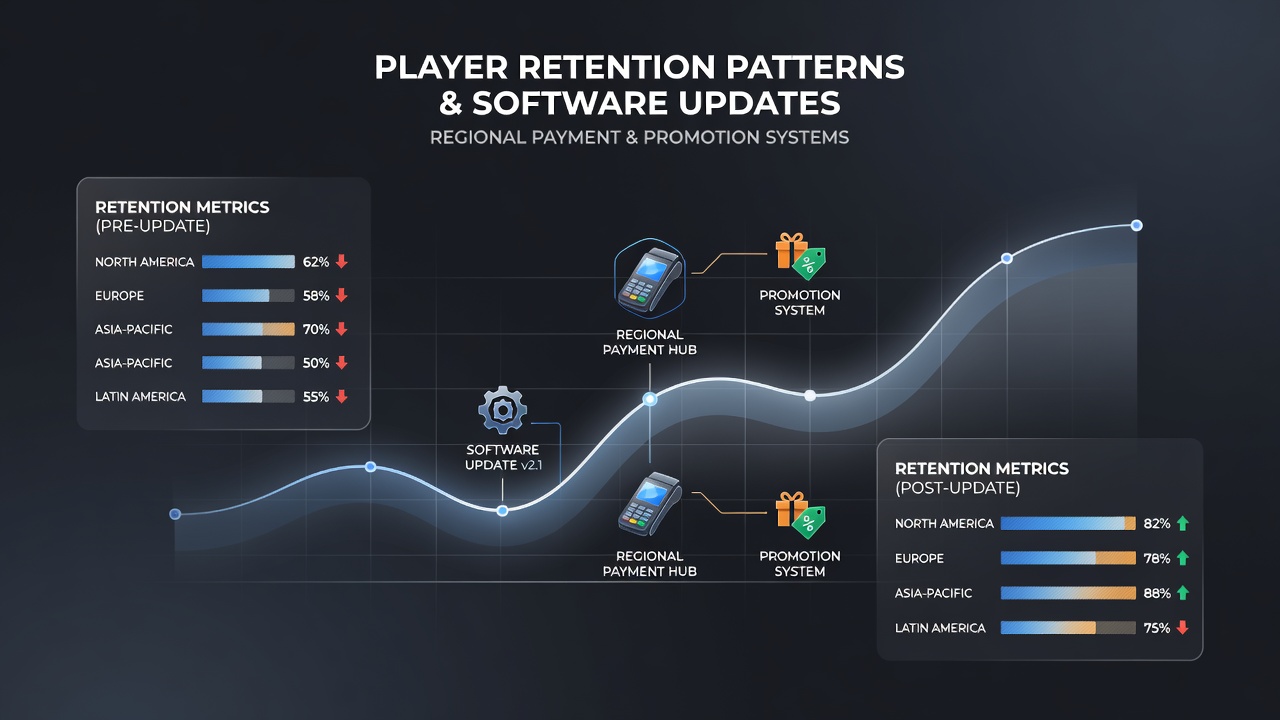
Operators also monitor how push notifications and in-app messages promoting new offers perform immediately after system updates. When backend changes alter the timing or targeting logic of these communications, engagement metrics shift accordingly. Data shared by industry associations in Singapore demonstrate that campaigns launched within 72 hours of a payment module update achieve different redemption volumes than identical offers deployed during stable periods, suggesting players respond to perceived system reliability as much as to the offer itself.
Observed Retention Patterns Across Jurisdictions
Longitudinal studies conducted by research centers in multiple countries track cohorts of players through successive update cycles. In several North American jurisdictions, retention holds steady when updates reduce average transaction time by more than 15 percent, whereas smaller efficiency gains produce minimal movement in return rates. Conversely, updates that introduce additional verification steps correlate with temporary dips in activity that recover only after operators communicate the changes clearly through in-platform messaging.
Asian markets display comparable trends but with different time scales. Platforms operating under Macau and Singapore frameworks report that players who receive promotional credits shortly after a payment system refresh tend to extend their play sessions over subsequent weeks. Analysts attribute this extension to reduced friction in both depositing and claiming rewards, which keeps accounts active during periods when competing operators launch their own campaigns.
June 2026 Update Clusters and Subsequent Metrics
During June 2026, several regional operators synchronized payment and promotion software releases ahead of summer holiday periods. Post-deployment reviews indicated that platforms completing these updates before the middle of the month sustained higher weekly active user counts through July compared with those that deferred changes until later. The difference appears linked to the alignment between system stability and the timing of seasonal promotional pushes rather than the content of the promotions alone.
Regulatory filings from Canadian provinces and Australian states provide further granularity, showing that players segmented by deposit method respond differently to the same update. Those using newer digital wallet integrations retained activity at higher rates when the software revision improved confirmation speed, while traditional card users showed steadier but less pronounced gains. These segmented patterns help operators refine future deployment schedules and regional targeting strategies.
Conclusion
Retention patterns tied to software updates in regional payment and promotion systems emerge from the interplay between technical performance and player expectations around transaction speed and reward access. Data collected across jurisdictions continue to illustrate that update timing, feature stability, and coordinated messaging influence how long accounts remain active, while ongoing monitoring allows operators to adjust deployment practices in response to observed cohort behavior.